
Las nueces de Calonge se cultivan en una de las tierras más fértiles del planeta, el Valle del Guadalquivir, en las cuales hay unas condiciones excepcionales e idóneas para el desarrollo del cultivo.
El Nogal tarda de cinco a siete años en convertirse en adulto y ser adecuado para la producción de las primeras cosechas. Existen muchas variedades de nueces, pero las cultivadas en nuestra finca son: Chandler, Howard, Franquette, Fernette e Ivarto. El objetivo de nuestra elección es estar lo más acertado posible y lo más cercano a lo que consideramos variedad óptima.
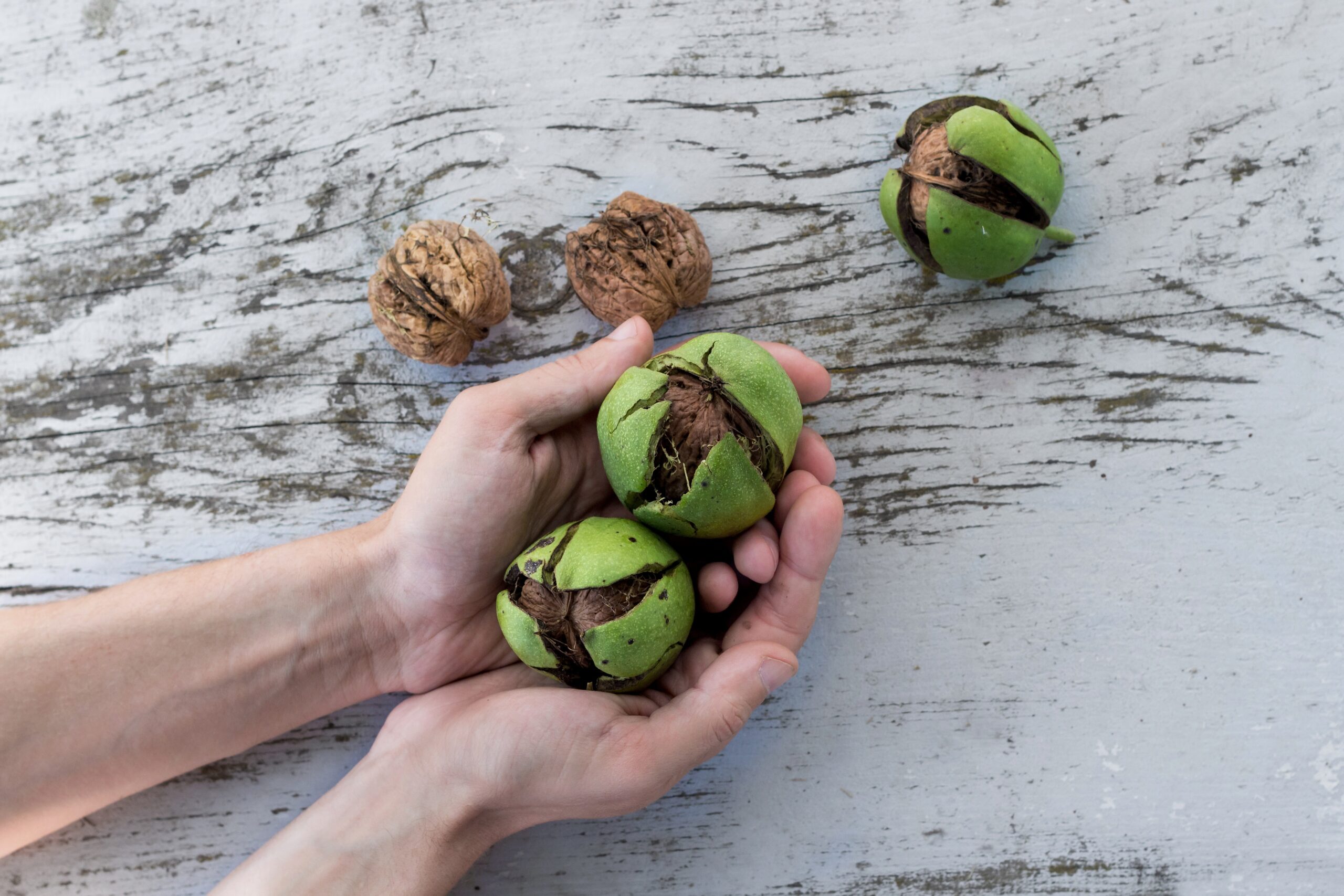
La cosecha empieza a finales de Agosto, principios de Septiembre, cuando la corteza verde empieza a abrirse, y dura aproximadamente hasta finales de noviembre. Las nueces se recolectan con una maquina especial que sacude cada árbol y las cosechadoras se encargan entonces de recogerlas del suelo y limpiarlas.
La primera operación a realizar después de la recolección es el descortezado o separación del pericarpio o ruezno del resto del fruto. Las máquinas descortezadoras retiran la corteza verde de la nuez. Tras ello, las nueces se lavan para eliminar los desechos y se separan manualmente para el secado. Las nueces se secan con aire seco, con la máxima rapidez posible hasta alcanzar un nivel óptimo del 8% de humedad. Esto previene el deterioro de la nuez y protege su máxima calidad durante el almacenaje.
La selección de la nuez se realiza para homogenizar partidas por tamaños, formas y colores, creando una gran diversificación comercial al gusto de los consumidores. En los procesos de selección realizamos las siguientes operaciones:
- Selección de defectos externos (color).
- Selección de defectos internos (nueces vacías o mal nutridas).
- Calibrado (tamaño y forma).
Las nueces se transportan a una planta de empaquetado donde se separan para ser comercializadas con cáscara o peladas.
Calonge walnuts are grown in one of the most fertile land in the world, the Guadalquivir Valley, where there are exceptional conditions and suitable for crop development.
The walnet tree takes five to seven years to become an adult and be suitable for the production of the first crops. There are many varieties of walnuts, but those grown on our farm are: Chandler, Howard, Franquette, Fernette and Ivarto. The aim of our choice is to be as accurate as possible and as close to what we consider optimal range.
The harvest begins in late August, early September, when the green crust begins to open, and lasts approximately until the end of November. The walnuts are harvested with a special machine that shakes every tree and then combines soil kept busy harvesting and cleaning.
The first operation after harvesting is husking or detachment of the pericarp or husk from the rest of the fruit. Debarking machines removed the green bark of walnut. After that, the walnuts are washed to remove debris and manually separated for drying. The walnuts are dried with dry air, with maximum speed to an optimal level of 8% moisture. This prevents deterioration of the walnut and protects the highest quality during storage.
The selection of walnut is performed to homogenize items by sizes, shapes and colors, creating a large trade diversification to consumer tastes. In the selection process we perform the following operations:
- Selecting external defects (color).
- Selection of internal defects (empty or malnourished walnuts).
- Calibrated (size and shape).
Walnuts are transported to a packing plant where they are separated to be marketed in shell or peeled.